

Applications and Market Opportunities of Vacuum Pumps in Carbon Capture (CCUS)
This article conducts a systematic analysis covering carbon capture technology pathways, the operational mechanisms of vacuum systems, equipment selection criteria, industry development trends, and market opportunities.
1. What is CCUS?
CCUS is the collective term for carbon capture, utilization, and storage technologies. Its primary objective is to reduce carbon dioxide emissions during industrial processes while utilizing or storing the captured CO₂ for long-term storage.
As global carbon neutrality goals advance, industries such as power generation, steel, cement, chemicals, natural gas processing, hydrogen energy, and waste incineration are actively deploying relevant technologies.
2.Main Carbon Capture Technology Routes
The current mainstream methods include chemical absorption, physical absorption, adsorption separation, membrane separation, low-temperature condensation, and direct air capture.
Chemical absorption exhibits the highest maturity and is suitable for large-scale flue gas treatment; however, it requires high regeneration energy consumption and uses solvents that are prone to corrosion. The adsorption method offers strong modularity and high energy efficiency, making it ideal for CO₂-rich conditions where desorption requires vacuum or heating, and is well-suited for small-to-medium scale applications and high-concentration scenarios. Membrane separation benefits from modular design but is constrained by membrane selectivity and permeability limitations. Low-temperature technology is appropriate for high-concentration gases but consumes significant energy. Direct Air Capture (DAC) targets the negative emission market by removing diluted CO₂ from the atmosphere, though it demands extremely high air flow rates and energy input.
Absorption Method: Flue gas containing CO₂ is brought into contact with a liquid solvent (chemical amine or physical solvent) to dissolve the CO₂ and achieve chemical/physical absorption within the absorption tower, followed by release and recovery of CO₂ via heating or pressure reduction in the regeneration tower. Chemical absorption (e.g., MEA, MDEA amine washing) represents the most mature flue gas decarbonization technology, offering high separation efficiency and suitability for low-concentration, high-volume applications; however, it suffers from high regeneration energy consumption and solvent decomposition that may corrode equipment. Physical absorption (e.g., Selexol, Rectisol) is suitable for high-pressure or high-CO₂ concentration streams, featuring lower energy consumption and no chemical reactions, though efficient absorption requires high pressure.
Advantages: High maturity, suitable for large-scale industrial application; the solvent is recyclable.
Disadvantages: Chemical absorption requires high-temperature steam desorption, with energy consumption often accounting for the majority of total capture energy requirements (2.2–3.5 GJ/t CO₂); moreover, solvents such as MEA exhibit strong volatility and corrosiveness; physical absorption necessitates high-pressure operating conditions.
Applications: Large-scale atmospheric scenarios such as power plant flue gas (carbon emission source), steel, and cement; oxygen-enriched combustion systems; natural gas/synthetic gas pretreatment.
Key parameters: absorbent type (MEA, MDEA, mixed amines, Selexol, etc.), desorption temperature/pressure, solvent circulation flow rate, flue gas cooling temperature, etc.
Membrane separation method: Utilizes selective permeation membranes (polymer membranes, MOF/covalent organic framework membranes, modified liquid membranes, etc.) to separate CO₂. By applying a pressure difference across the membrane, CO₂ preferentially permeates, enabling continuous purification under ideal conditions. Key advantages include modularity, absence of phase changes, and no use of fragile solvents; disadvantages include limited CO₂ permeation rate and selectivity, requirement for multi-stage series configurations or compressed gas to achieve high purity, and sensitivity to membrane fouling. Typical processes employ multi-stage parallel membrane modules where one side of each stage is depressurized (under vacuum) while the other is pressurized, enhancing overall recovery efficiency—commonly applied in large-scale ethane cracking gas and natural gas lift processes for CO₂ removal, as well as in tail gas capture systems for small-to-medium scale facilities. Critical parameters include membrane material flux and selectivity, pressure differential per stage, capture efficiency, and membrane lifespan.
Low-temperature separation/condensation method: The gas is cooled until the CO₂ reaches its dew point or freezing point, and CO₂ is separated via condensation or precipitation. These methods include conventional low-temperature distillation, expansion throttling, pulsating cooling, or the use of expandable refrigerants. The advantages are that no chemical solvents are required and SOₓ/NOₓ as well as moisture can be removed simultaneously; the disadvantages are high refrigeration energy consumption (typically>2000 kJ/kg CO₂) and a risk of equipment blockage due to water freezing in low-concentration flue gases. This method is suitable for applications with high CO₂ concentrations where low-temperature energy can be recovered, such as refinery gases, liquefied natural gas tail gases, and large-scale steel furnace gases. Key parameters include operating temperature (below −20°C), pressure, and refrigerant cycle efficiency.
Chemical cycle combustion: This process utilizes renewable oxidants (such as iron oxide or calcium oxide) to react with fuel, separating CO₂ and H₂O while capturing CO₂ during the regenerator’s cycling. Its advantage lies in producing nearly pure CO₂ combustion products without requiring extensive separation; however, drawbacks include wear of cycling materials and energy loss during oxidant regeneration. Technical approaches include calcium cycling (CaO/limestone) decarbonization and chemical absorption power generation (CSPP). These processes inherently integrate capture and combustion, with key parameters including cycling temperature, oxidant loading capacity, and cycle efficiency.
Direct Air Capture (DAC): A process for extracting CO₂ from the atmosphere at concentrations of approximately 400 ppm. Common methods include solid adsorption (using carbonate-based materials, hydroxyl-based adsorbents, ion exchange resins, etc.) and liquid solvent absorption (weakly alkaline solutions or amine solutions). Air is first filtered by a fan before entering the adsorption tower, where CO₂ is concentrated within the adsorbent; subsequent desorption occurs via thermal, vacuum, or alkaline washing processes. Key advantages include deployability at any location and achievement of negative emissions; major drawbacks include extremely high energy consumption (currently around 2.5–5 GJ/t CO₂) and substantial fan power requirements. Typical DAC systems are small-scale (at the ten-thousand-ton level), primarily addressing mass transfer challenges at low concentration levels. Adsorption-based DAC systems (e.g., Climeworks) employ dual-vacuum/thermal regeneration, with vacuum pumps removing desorbed CO₂ from the adsorption bed; solvent-based DAC systems (e.g., potassium carbonate circulation) utilize thermal separation in the desorption tower. Critical parameters include air flow rate (million m³/t CO₂), desorption temperature/pressure, adsorbent selection, and energy recovery efficiency.
Biological capture/mineralization: Utilizing plants, microalgae, microorganisms, or geological mineralization processes to sequester CO₂. Examples include algal bioreactors, afforestation, and microbial-enhanced weathering. These methods typically do not rely on vacuum pumps; their mechanisms vary but fall broadly under the category of CO₂ utilization and carbon sequestration (CCU), and thus will not be discussed in detail in this report.
3. The Core Role of Vacuum Pumps in Carbon Capture
The fundamental role of a vacuum pump is to reduce system pressure, thereby altering gas-liquid or gas-solid equilibrium and facilitating the release of carbon dioxide from absorbents, adsorbents, or membrane systems. For instance, heating an amine regeneration tower under vacuum lowers the solvent’s boiling point, enabling CO₂ release with minimal steam consumption; vacuum pressure swing adsorption (VPSA) processes employ vacuum to desorb bound CO₂; membrane separation often applies vacuum on one side to enhance permeation efficiency; while DAC systems utilize fans for air intake and vacuum desorption to release CO₂.
By reducing the desorption pressure, thermal energy consumption can be minimized, regeneration efficiency improved, and overall system economics enhanced.
4.Applications of vacuum systems in various manufacturing processes
Across various capture pathways, the common applications and operational mechanisms of vacuum pumps include:
Amine absorption and desorption: The amine-rich solution in the regeneration tower requires heating to desorb CO₂. Vacuum operation lowers the solvent’s boiling point, reduces steam consumption, and prevents high-temperature degradation of the solvent. As demonstrated in the amine regeneration process described by Puxu, vacuum-induced vapor action releases CO₂ from the solution, after which the vacuum pump draws the resulting CO₂/vapor mixture into a collection vessel. The required vacuum level typically ranges from 0.1 to 0.3 bar (10⁴–10⁵ Pa), with pump flow rates varying from several thousand to tens of thousands m³/h depending on flue gas volume and CO₂ yield. Systems often handle high-water-content gases containing corrosive components such as ammonia and sulfides; liquid ring pumps are therefore the preferred choice due to their resistance to moisture and acidic gases (using corrosion-resistant materials and water as sealing fluid for acid neutralization), or combined units with condensers to prevent pump flooding. Dry screw pumps or Roots pumps may also be employed for subsequent pressure reduction to achieve lower vacuums (up to several mbar). Vacuum pumps consume significant energy and are mutually exclusive with steam-based desorption processes; some systems replace partial high-temperature desorption with vacuum operation to conserve steam.
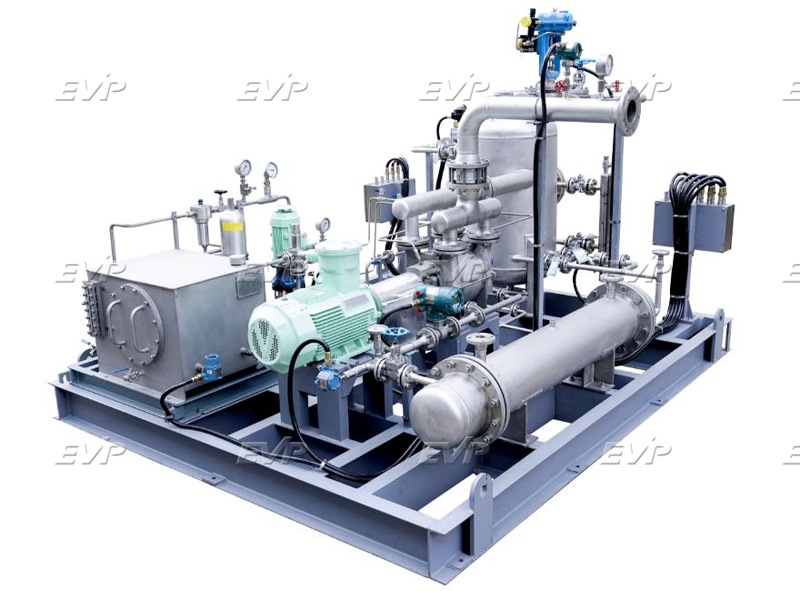
Solid Phase Adsorption (PSA/VPSA/TSA): In pressure swing adsorption, vacuum pumps are employed for desorption and regeneration of each adsorption bed. The typical vacuum pressure swing adsorption (VPSA) process rapidly depressurizes to facilitate desorption after each cycle, with a common desorption pressure ranging from 0.1 to 0.3 bar. EMIS-CCU data indicate that the desorption pressure in VPSA can be reduced to 0.1–0.2 bar. Vacuum pumps (e.g., dry screw, scroll, or molecular pumps) are used to remove CO₂ from the adsorption bed, with outlets connected to expansion valves or direct compression systems. These pumps must handle CO₂ containing trace amounts of water vapor or impurities; typically, they employ dry screw, dry scroll, or scroll pumps due to their ability to achieve deeper vacuums and resistance to minor acidity (if present). In terms of energy consumption, vacuum pumps account for a significant portion of VPSA processes’ total energy usage (ranging from dozens to hundreds of kWh per ton of CO₂). For applications requiring higher purity or rapid desorption, pneumatic injection or low-temperature assistance may be incorporated. Common faults include pressure vessel leaks, seal wear, and system moisture condensation, necessitating regular leak detection and drying treatments.
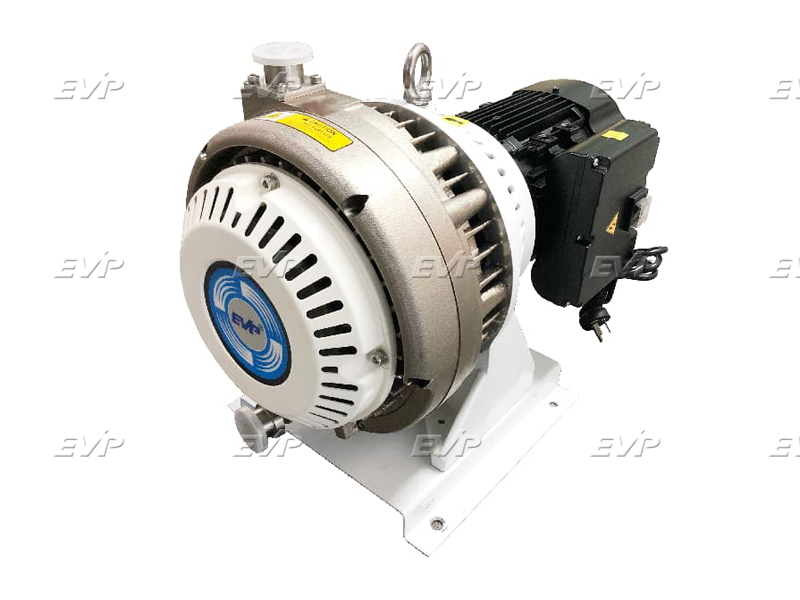
Membrane separation and capture: Membrane modules typically operate under vacuum on one side to enhance driving force. According to the Busch website, in multi-stage membrane systems, one side is pressurized by a blower while the other is drawn by a vacuum pump, creating a pressure differential across each stage to improve CO₂ permeation efficiency. The required vacuum level depends on membrane type and target gas purity, generally ranging from several hundred mbar to 1 bar; for high-temperature resistant membranes commonly used in carbon capture, temperatures can reach 80–100°C. Commonly employed vacuum pumps include liquid ring pumps (for water-containing gases) or dry screw pumps (for anhydrous conditions). The treated gas is typically dry, passes directly through the pump after particle filtration, with flow rates designed based on membrane flux, typically ranging from hundreds to thousands of m³/h. Energy consumption in membrane systems primarily stems from compressor and gas pumping power; regulating vacuum-side suction speed helps reduce compression energy consumption. Key maintenance tasks include monitoring membrane fouling, replacing pump sealing fluids, and repairing system leaks.
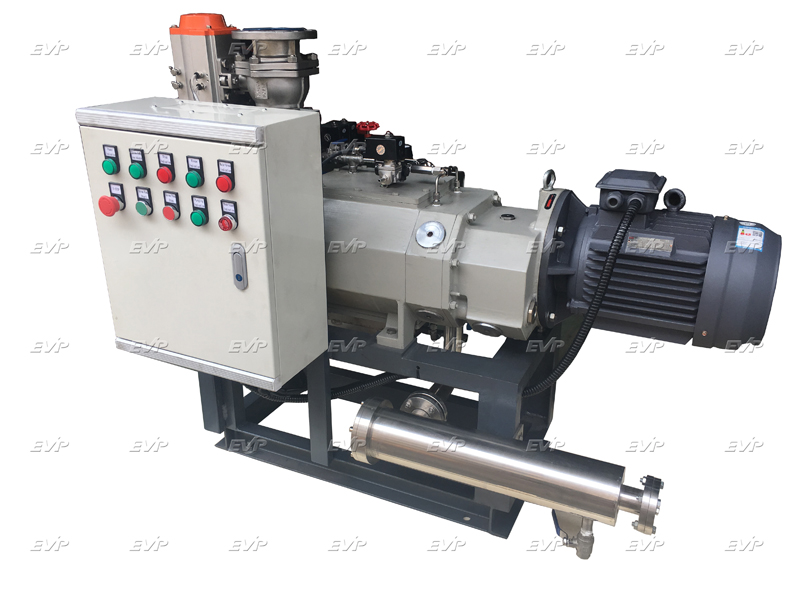
Low-temperature condensation/freezing separation: Vacuum pumps are primarily employed in these processes to maintain low pressure for enhanced heat transfer efficiency or to assist in removing condensates. For instance, in vacuum cryogenic beds, the pump removes air from the cryogenic system to lower the freezing point; in expansion-throttling circuits, vacuum auxiliary pumps recover the expanded low-pressure refrigerant. However, such processes rely heavily on the refrigeration cycle itself, making vacuum pump usage relatively uncommon—they typically serve only as auxiliary equipment. When used for recovering gases released during compression, the pumps must withstand low-temperature corrosive gases (CO₂ and residual SOₓ), with dry screw or scroll pumps commonly operating under temperature-controlled conditions. System energy consumption is significantly influenced by both the compressor and vacuum pump, necessitating integrated optimization of heat exchangers and vacuum pumping rates.
Direct Air Capture (DAC): In solid adsorption-based DAC systems, air containing particulate matter is filtered and fed into an adsorption tower to capture CO₂; during regeneration, CO₂ is released through heating or vacuum desorption. Busch emphasized that a vacuum environment is crucial for promoting CO₂ desorption from the adsorbent and its return to a gaseous state. The standard procedure involves initially drawing air into the system using a fan, then shutting off the fan during the desorption phase while employing a vacuum pump to reduce internal pressure for CO₂ release; subsequently, the vacuum pump continuously draws the separated gas to a collection tank. The vacuum level typically ranges from 0.05 to 0.2 bar, significantly lower than the adsorption pressure (approaching atmospheric pressure). Commonly used pumps include rotary vane pumps or dry screw pumps (e.g., the MINK rotary vane pump employed by Climeworks), as DAC streams often contain substantial amounts of water vapor and trace amounts of ammonia. DAC systems require high operational stability of the pumps, and pump energy consumption substantially impacts operating costs. For solvent-based DAC systems (e.g., potassium carbonate liquid systems), regeneration primarily relies on heating and stripping processes, with the vacuum pump playing a limited role—only potentially utilized at the final stage for capturing desorbed CO₂.
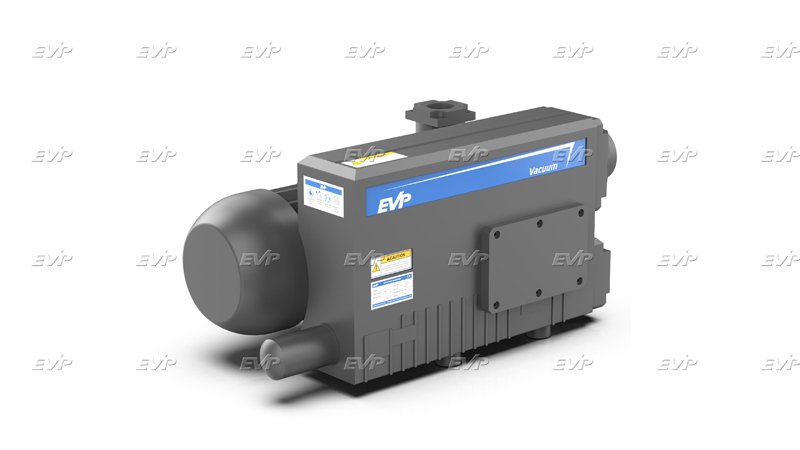
Biological/mineralization pathway: Vacuum pumps are generally not employed. Biological treatment (e.g., algal cultivation) relies on agitation or aeration rather than vacuum conditions; mineralization (carbonate rock storage) likewise does not involve a vacuum stage. Vacuum pumps may occasionally be used for degassing in certain geological storage operations (such as CO₂ extraction from rock powders), but this falls outside the scope of conventional CCUS processes.
5. Analysis of Vacuum Pump Types
The liquid ring vacuum pump is suitable for high-humidity and corrosive environments.
Dry screw vacuum pumps are suitable for clean gas applications and energy-saving scenarios.
The dry claw pump is easy to maintain and suitable for medium vacuum ranges.
The Roots booster is typically used in conjunction with a pre-stage pump to increase the pumping speed.
For special deep-vacuum applications, multi-stage vacuum systems may also be employed.
6. Key Factors in Model Selection
Different requirements are imposed on vacuum pumps depending on the application environment, with the following factors being primarily considered:
Vacuum range and pumping speed: As mentioned above, VPSA requires medium to low vacuum (0.1–0.3 bar), while deep dehydration or distillation may demand even higher vacuums. Vacuum requirements determine the pump type: single-stage liquid ring or rotary vane pumps typically operate at around 10⁻¹ bar; two-stage liquid ring or assisted systems can achieve lower pressures; dry screw and rotary vane pumps can reach 10⁻⁴ to 10⁻² mbar. Pumping speed requirements depend on gas flow rate and CO₂ yield: industrial absorption-regeneration systems produce hundreds to thousands of m³/h of desorbed gas, requiring vacuum pumps with capacities ranging from several thousand to tens of thousands of m³/h; small-scale DACs and laboratory-level adsorption units require only dozens to hundreds of m³/h. Typical parameters are compared in the table.
Gas component compatibility: The gas mixture used in the capture process may contain corrosive chemicals such as H₂O, water vapor, volatile amines, sulfides, oxides, and trace amounts of oil mist. Liquid ring pumps are resistant to moisture (can operate with water or anti-corrosion fluids) and can handle water vapor and small amounts of acidic gases, making them ideal for absorption towers, DAC systems, and other environments with high moisture or acidity levels; dry screw pumps and scroll pumps are suitable for clean or dry gases, provided the gas temperature remains below its maximum allowable inlet temperature. Roots pumps are typically combined with downstream pumps (screw or molecular) to enhance pumping rates in high-flow applications.
Particles and liquids: If the gas contains droplets or particles (e.g., fly ash in dust-laden flue gases, atomized absorbents), pre-filtration and separation must be performed to prevent pump damage. Liquid-ring pumps can handle small amounts of condensable steam; dry pumps require measures to prevent liquid ingress (to avoid liquid hammer). Pre-treatment equipment (coolers, demisters, filters) is essential.
Temperature: Vacuum pumps have a maximum suction temperature limit, typically <60–80°C; the gas must be cooled before feeding into the pump. High-temperature gases require cooling via a heat exchanger or spray cooling system. Certain specialized liquid-ring pumps can withstand higher temperatures and particulate matter but require special design.
Material Compatibility: Corrosion-resistant materials should be selected due to corrosive effects. For pump bodies, options include cast iron, carbon steel (with chemical scale inhibition treatment), or stainless steel (e.g., SS304, SS316L, or even duplex steel). When handling gases containing amines or sulfur, internal lining coatings or stainless steel liquid ring pumps may be employed. For applications involving volatile organic compounds and solvent vapors, pumps with excellent compatibility with organic solvents—such as dry screw pumps or dry claw pumps—are recommended.
Energy consumption and efficiency: Liquid-loop pumps are generally larger and more energy-intensive than dry pumps (particularly when requiring multi-stage configurations under deep vacuum conditions), but they offer superior durability and simpler maintenance; dry pumps, while more efficient, require more frequent servicing. Electrical equipment such as vacuum pumps and blowers can account for dozens of percentage points of the total energy consumption in a capture system, necessitating consideration of energy-saving variable-frequency control and energy recovery (e.g., by recovering heat from extracted warm CO₂).
Reliability and Maintenance: Continuous operational reliability is paramount. Liquid ring pumps feature simple mechanisms with minimal vibration, but their sealing fluid requires regular replacement and replenishment; dry-type pumps necessitate periodic oil changes, dust removal, and maintenance of anti-corrosion coatings. Common faults include seal leakage, bearing wear, internal water ingress, or carbon deposition in oil mist. Key maintenance practices include maintaining proper pretreatment (to prevent abrasive particles from entering), regularly monitoring seal fluid quality, tracking temperature and vibration levels, and implementing specialized care measures for corrosive gases.
7. Technical Challenges and Development Trends in the CCUS Market
Technical Challenges:
Energy consumption and efficiency: Vacuum pumps operate under conditions of low pressure and high flow rate, resulting in significant power consumption that constitutes one of the primary energy-consuming components in carbon capture systems. Power consumption can be reduced through variable frequency control, two-stage compression (pump + booster), or intermittent regulation utilizing surplus heat sources. System-level integration of energy recovery measures is essential, such as reusing low-grade heat generated during vacuum desorption processes.
Materials and Corrosion Resistance: CO₂ capture gases often contain acidic substances such as SOₓ, NOₓ, amine decomposition products, and even HCl or HF (from biomass combustion flue gases). Vacuum pumps, particularly liquid-ring pumps made of ordinary steel, are prone to corrosion; therefore, they require anti-corrosion linings or high-alloy materials (e.g., duplex steel, titanium alloys) and must be sealed with alkaline solutions for neutralization. Dry-type pumps require specialized sealing coatings to prevent acid erosion. New materials (such as polymer coatings and corrosion-resistant ceramics) along with advanced pump sealing fluids (e.g., alkaline solutions) represent key focuses in research and development.
Moisture and liquid management: While liquid ring pumps can handle moisture, excessive liquid may cause liquid carryover and seal fluid loss. For steam recovery or desorption gases with high dew points (e.g., in amine regeneration processes), efficient condensation separation systems, cooling coils, and dedicated liquid collectors must be installed to protect the pump. Dry-type pumps require measures to prevent liquid condensation-induced liquid hammer. Key R&D directions include integrated pump-condenser circuits and on-site self-circulating cooling systems.
Substitution of wet pumps with dry pumps: Wet pumps (e.g., liquid-ring types) are easy to maintain but consume high energy and have large size; dry pumps (such as screw or claw pumps) offer high efficiency but require stringent gas specifications (low moisture content and high purity). In the future, by employing coatings combined with sealing fluids (e.g., directional spraying), dry pumps can safely handle CO₂ gas containing trace amounts of acidity and water vapor, thereby achieving energy-efficient alternatives to wet equipment.
Modularity and maintainability: Vacuum systems must accommodate varying project scales (from pilot-scale to million-ton capacity), making modular design (with small modules connected in parallel or series) the prevailing trend. Additionally, easy-maintenance configurations (rapid component replacement and simplified pump array configurations) help minimize downtime.
Optimization of adsorbent/membrane/solvent coupling: It is essential to synergistically optimize the performance of vacuum pumps and carbon capture media. For example, for specific novel adsorbents (e.g., MOFs or zeolites) or solvents, customized optimal desorption pressures and thermal/vacuum combination processes should be established. Additionally, intelligent monitoring systems (such as vacuum diagnostic tools) must be developed to guide pump operating conditions.
System-level energy recovery: The waste heat from the vacuum pump (including heat dissipation from the pump body and condensation heat) can be reused to preheat air or regenerate steam, thereby reducing overall energy consumption. For example, the cooling liquid from the vacuum pump can be utilized to heat the bottom of the absorption tower or the desorber.
Development Trends and Opportunities (Short-, Medium-, and Long-Term):
Years 1–3: Optimize existing pump designs to meet CO₂ capture requirements, including the introduction of specialized corrosion-resistant liquid-ring pumps and coated dry pumps; enhance pre-treatment and post-pump processing systems (online condensation and sealed liquid circulation systems); and strengthen on-site operational data collection and performance diagnostics. Market opportunities lie in supporting services for CCUS demonstration projects and the demand for small-scale DAC demonstrations (1–10 kt/year) requiring compact pumps.
Years 3–7: Validation of new pump technologies and small-scale applications, including high-efficiency pump sets with integrated booster modules and ultra-low vacuum efficiency pumps; standardization and modularization of CO₂ capture facilities (“vacuum pump + pipeline + heat exchanger” integrated packages); expansion of global CCS funding scales leading to a significant increase in projects. Potential markets include natural gas processing plants, CO₂ purification in synthetic fuel applications, and equipment upgrades.
Years 7–15: A period of large-scale commercialization and high-tech iteration. Advanced pump designs (e.g., corrosion-resistant pumps featuring metamaterials and ceramic components) and systems deeply integrated with comprehensive carbon capture processes (such as vacuum thermal coupling modules and intelligent control systems) are expected to emerge. Market opportunities include comprehensive one-stop solutions (CCUS EPC + operation and maintenance) driven by carbon neutrality demands, as well as domestic substitution of mid-to-high-end components in the vacuum pump supply chain. Furthermore, advancements in Direct Air Capture (DAC) and long-distance CO₂ transportation (hydrogen-CO₂ co-transport technology) will boost demand for specialized pump configurations for marine and floating platform CO₂ capture applications.
8. Conclusion and Recommendations
Vacuum pumps play a critical role in carbon capture systems; engineering, procurement, and R&D teams should prioritize the following considerations during equipment selection and validation:
preferred pump types: For wet corrosion applications, liquid ring pumps (single-stage or double-stage) are the first choice; for dry or chemical gas environments, dry screw pumps or claw pumps may be selected. For ultra-deep vacuum requirements, Roots boost pumps or molecular pumps can be added. In DAC low-flow scenarios, high-speed vane pumps or miniature scroll pumps are suitable. Selection should consider actual vacuum levels and flow rates to ensure optimal operational efficiency at design point.
Key testing/verification requirements: Prior to commissioning, a simulated gas test (including CO₂, H₂O, NH₃/SOₓ, etc.) must be conducted to evaluate the pump’s ultimate vacuum performance and sealing integrity; during system debugging, long-term stability tests should be performed, monitoring parameters such as pump temperature, vacuum level curves, and leakage rates; periodic sampling should be carried out to analyze the pH and contamination levels of the sealing fluid, as well as the composition of any leaks.
The EVP team offers professional advice and equipment. Feel free to consult us!