

Cryogenic Pump in Industry of Types and Applications
Cryogenic pumps are mainly divided into the following categories
Cryogenic condenser pump: Uses low-temperature surface condensation of gas molecules to achieve pumping, suitable for high vacuum environments.
Cryogenic adsorption pump: Using adsorbents (such as activated carbon) to adsorb gas molecules.
Cryogenic pump: Utilizing a refrigeration mechanism for cooling, suitable for high cleanliness and pollution-free environments.
Cryogenic pumps of specific uses
Refrigeration industry: Low temperature pumps are used in refrigeration units, ice makers, air conditioners, and other equipment to circulate condensers and evaporators, ensuring cooling effectiveness.
Medical industry: used for the cryopreservation and transportation of frozen storage equipment such as blood, vaccines, drugs, and human tissues.
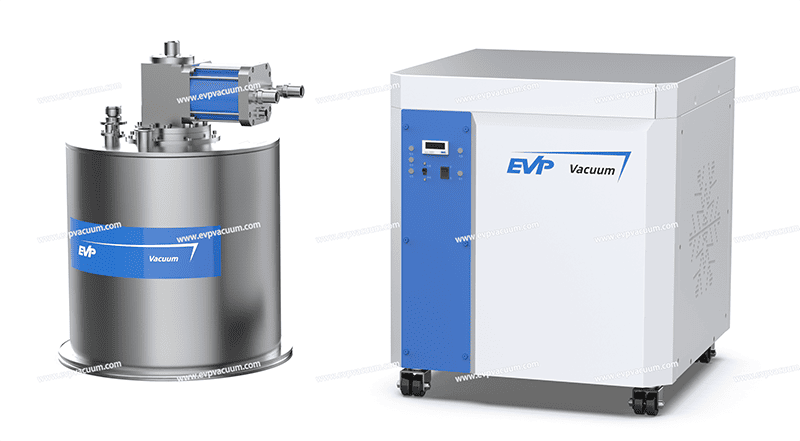
Semiconductor industry: used for process applications in high vacuum environments to reduce the velocity of gas molecules and ensure the stability of semiconductor processes.
Aerospace: Widely used in spacecraft fuel delivery systems, propellant delivery systems, etc.
Chemical industry: Provide a stable low-temperature environment to ensure the smooth progress of chemical reactions.
Pharmaceutical industry: Ensure the storage and production of drugs under specific low-temperature conditions.
Food industry: Extend the shelf life of food and maintain its nutritional content.
Research experiment: Provide high vacuum environment in fields such as semiconductor manufacturing and nanomaterial research to ensure the accuracy of experimental results.
Electronic industry and optical instrument manufacturing: improving product quality and production efficiency.
Vacuum equipment: Used in conjunction with other vacuum equipment to form a complete vacuum system.
Cryogenic pump of working principle
A cryogenic pump utilizes a low-temperature surface below 20K to condense gas molecules, and removes various gases through the action of a bipolar cold head, achieving an ultra-high vacuum state. Its working principle includes low-temperature condensation and low-temperature adsorption. The former achieves gas extraction by condensing gas molecules, while the latter adsorbs gas molecules through adsorbents.