

Application of vacuum pumps on offshore drilling platforms
Abstract
Offshore drilling platforms have limited space and high requirements for corrosion resistance and reliability of equipment. Vacuum pumps play a crucial role in mud degassing, wastewater collection, gas extraction and vacuum delivery. The performance of different pump types (such as rotary vane pumps, Roots pumps, dry pumps, liquid ring pumps, Venturi jet pumps, etc.) varies significantly, and it is necessary to select the appropriate model according to the application. By using corrosion-resistant materials and explosion-proof electrical equipment, optimizing piping arrangements, and regular maintenance and online monitoring, operational reliability and energy efficiency can be enhanced. The application of vacuum pump systems can significantly enhance operational efficiency and ensure safety, as evidenced by practical cases. It is recommended that platform operators take into account indicators such as pumping speed, vacuum degree, corrosive environment, power consumption and noise when selecting models, give priority to mature products from mainstream manufacturers, and conduct energy audits and intelligent transformation to achieve reliable, safe and energy-efficient operation.
Technical Background
A vacuum pump is a mechanical device used to create and maintain a vacuum (below atmospheric pressure) environment by removing gas from a system by mechanical or fluid means. According to the working principle, they can be classified as positive displacement pumps (such as rotary vane pumps, Roots pumps, dry screw pumps, liquid ring pumps), flow pumps (such as jet pumps, diffusion pumps), etc. The Marine environment is prone to salt spray, high humidity and often contains corrosive gases (such as H2S), so the design and installation of vacuum pumps need to take into account corrosion resistance and explosion-proof requirements. Key performance indicators of vacuum pumps include pumping speed (flow rate), ultimate vacuum (minimum achievable pressure), energy consumption and noise, etc. Offshore drilling platform equipment must meet standards such as “Safety Requirements for Vacuum Pumps” GB/T 22360-2008, and be designed with reserved maintenance space and anti-corrosion and explosion-proof measures.
Application scenarios
In offshore drilling platforms, vacuum pumps are mainly used in the following scenarios:
Mud degassing:Delivering the mud to a vacuum degasser to release dissolved gases by reducing the pressure and improving the density stability of the mud;
Wellhead/well control systems: Vacuum devices can be used in mud circulation systems to remove gas and reduce the risk of wellhead pressure fluctuations;
Drillingfluid delivery: Jet or vacuum pumps are used to deliver cuttings and mud to prevent leakage;
Domestic sewage collection: Toilet black water and domestic sewage are sucked into the vacuumsystem on the platform using a vacuum pipe network and transported to treatment tanks;
Gasextraction: Extracting harmful gases from closed containers or equipment, commonly seen in oil-water separators and ventilation ducts;
Seawaterdesalination/cooling: Vacuum pumps are used to extract air from circulation systems (such as steam turbine condenser evacuation, vacuum membrane distillation, etc.)
Main pump types and how they work
Rotaryvane pump: An oil-sealed rotary positive displacement pump, where the vanes attach to the rotor and rotate to create expansion and compression space to expel the gas. The ultimate vacuum can reach 10_3 to 10_1 mbar, and the pumping speed is moderate (tens to thousands of m3/h). Compact and easy to maintain, suitable for general oil and gas and mud systems, but sensitive to solid and corrosive gases, requiring oil lubrication and regular replacement, and prone to It is often used with explosion-proof motors.
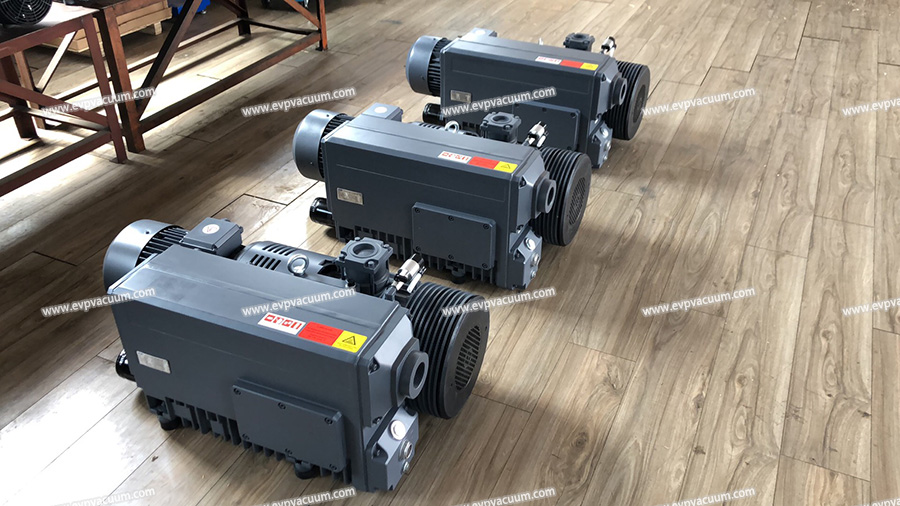
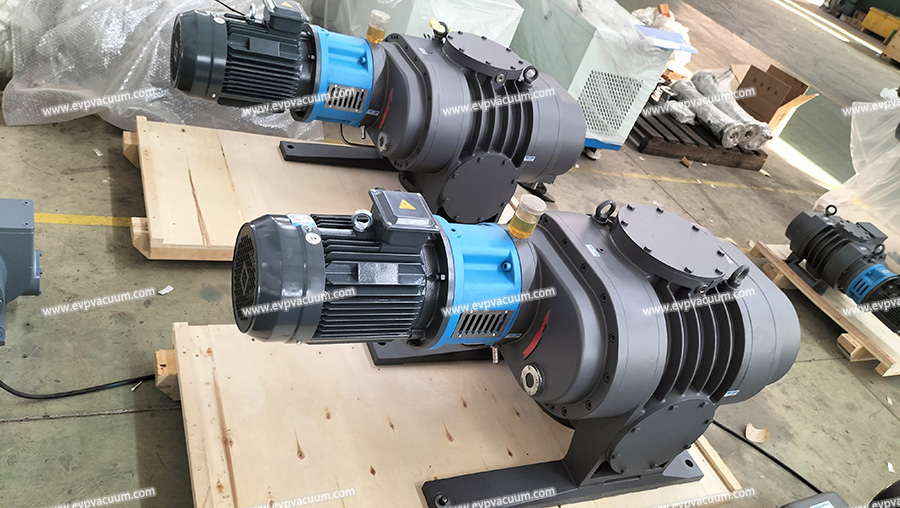
Roots pump: A positive displacement pump with two or three synchronous rotors, which mustbe used in conjunction with a pre-stage rotary vane pump to achieve high flow rates (hundreds to tens of thousands of m3/h) and very low vacuum (~10_2 mbar). Fast start-up, high efficiency, but high requirements for gas cleanliness, complex structure, large floor space. It is often used in situations where high pumping speed is required, such as in conjunction with the rear end of mud gas treatment.
Drypumps (screw pumps) : oil-free screw or toothed pumps where gas is discharged between the screws during A wide range of pumping speeds (tens to thousands of m3/h), up to 10_3 to 10_2 mbar vacuum. The advantages are oil-free, pollution-free and corrosion-resistant, suitable for clean or explosive environments; Low maintenance costs, but complex structure and high initial investment.

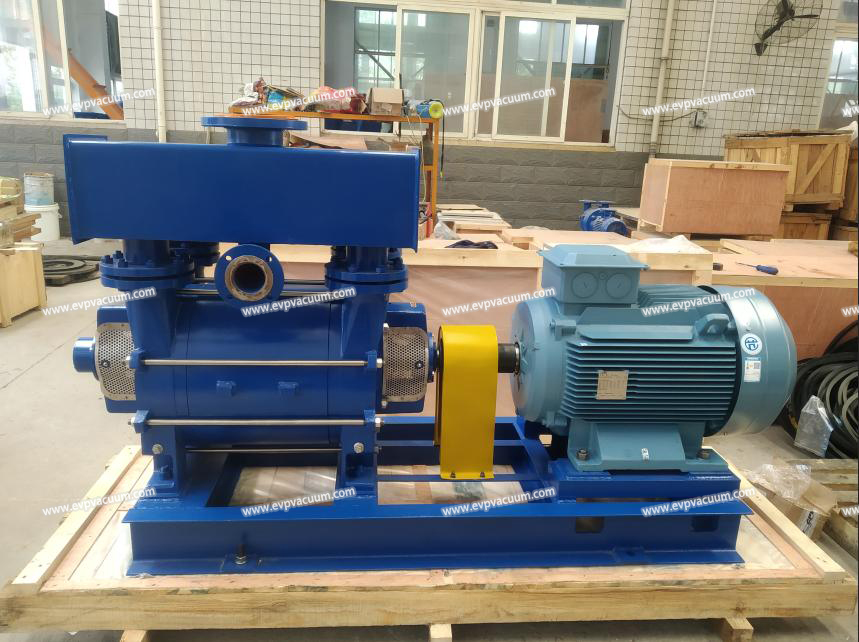
Liquid ring pump: A liquid ring is formed inside the pump body, and a vacuum is created by compressing the liquid with the impeller. It can withstand high temperature and high humiditygases, pumping speed can reach several thousand m3/h, and the ultimate vacuum is generally between 10_2 and 10_1 bar. It is highly resistant to corrosion, can use brine as the ring liquid, and has a simple and reliable structure. But it consumes a lot of energy, takes up a lot of space and has moderate noise. It is often used in situations with high moisture content or fine solid phase gas, such as condenser evacuation, gas extraction with water, etc.
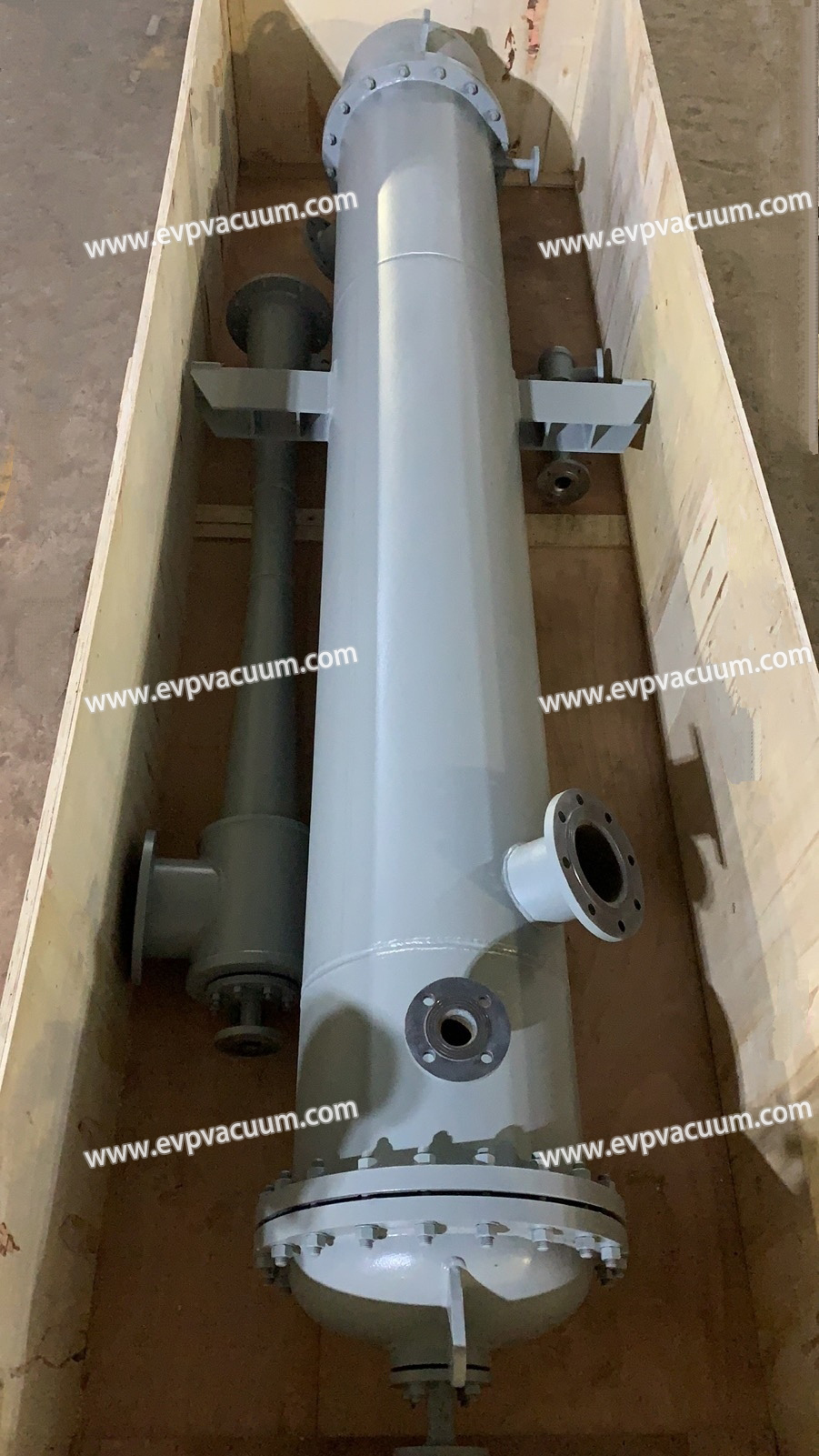
Jet pump (Venturi pump): Uses a jet of gas or liquid to create a vacuum in a contracted tube section without moving parts. The pumping speed is relatively low (from a few m3/h to over a hundred m3/h), and the ultimate vacuum is about tens of kilopascals (generally up to 25 “Hg or about 85 kPa). Corrosion-resistant and wear-free, suitable for adsorbingsolids/liquids such as sludge in flue gas or slurry conveying systems.
Key performance comparisons of the above pump types are shown in Table 1:
| Pump
type |
Pumping
speed range (m³/h) |
Ultimate vacuum | Corrosion resistance | Explosion-proof applicability | Common uses |
| Rotary vane
pump |
~ 10-2000 | ~0.1-1 mbar | Medium (requires oil lubrication) | Can be used as an explosion-proof
motor |
General laboratory and industrial pumping |
| Roots pump | ~ 100-10000 | ~0.01-1 mbar (with a
forepump required) |
Low (clean gas required) | Explosion-proof design | High flow, low vacuum Settings |
| Dry pump
(screw) |
~ 50-5000 | ~0.01-10 mbar | High (oil-free,
corrosion-resistant |
Easy to achieve explosion-proof | High cleanliness
requirements are needed in petrochemicals, semiconductors, etc |
| Liquid ring
pumps |
~ 50-5000 | ~5–30 mbar | Very high
(dehumidifiable) |
Common
explosion-proof type |
Mixed gas extraction, condenser vacuum |
| Jet pump | ~ 5-1000 | ~100–200 mbar | Material
determination |
No moving parts safe | Suction mud, simple vacuum conveying |
Specific uses on offshore drilling platforms
Mud degassing: Natural gas or drilling cuttings gas is often mixed in the platform mud. In the circulation system, large air bubbles are first removed by a gas-liquid separator, and then dissolved gas is further removed by a vacuum degasser to ensure the stability of the mud density. The vacuum degasser reduces the pressure to lower the solubility of the gas,causing bubbles to precipitate in the separation The advantage is the efficient removal of fine bubbles, effectively reducing the risk of blowout; The downside is the need for continuous power supply and regular oil changes and cleaning.
Wellcontrol assistance: While vacuum pumps are not directly involved in blowout protection, well control efficiency can be enhanced by stabilizing mud performance through degassing. Some systems can use vacuum pumps to reduce pressure in confined. Spaces and assist in fluid delivery during wellhead control operations.
Vacuumconveying and suction: Mud chips, wastewater, etc. produced by the platform can be collected through the vacuum conveying system. For example, a sludge vacuum pump with a jet pump can suck drilling sludge into a dedicated container, achieving closed material transportation and reducing secondary Vacuum collection systems similar to those used for domestic sewage also rely on vacuum pumps to create negative pressure in the pipe network to transport wastewater from each compartment to the sewage treatment facility. For example, 16 platform uses the EVAC vacuum sewage system, which starts with jet pumps below -40 kPa to draw black water into the sewage collection tank.
Gas extraction: For the recovery or discharge of gas in the gaps of equipment such as oil tanks, separators, and compressor rooms. The vacuum pump can extract the residual gas in the tank orpipeline (such as the residual gas in the paint chamber or airbag) and discharge it into the safety treatment system.
Offshorecooling and closed cycles: Similar to ships, condensers and turbine sealing systems on offshore platforms also require vacuuming to maintain low back pressure, and liquid ring pumps can be used for long-term stable operation.
These applications complement each other to form the overall layout of the platform vacuum system:
Performance metrics and comparisons
The main performance indicators of vacuum pumps include: pumping speed (generally measured in m3/h), ultimate vacuum degree (the lowest achievable pressure), energy consumption (power/efficiency), and noise level. For example, liquid ring pumps can withstand moisture and their ultimate vacuum is generally between 5 and 30 mbar, but they consume more energy; Dry screw pumps have a limit vacuum as low as 10_2 mbar, are efficient but sensitive to particles; Jet pumps have a limit vacuum of about 0.1 bar (~100 mbar), with low energy consumption and almost no noise. When choosing, take into account the pumping speed/vacuum requirement and energy consumption, as well as safety level. Busch reports that its high-efficiency vacuum pumps, with variable frequency speed control (VSD) and intelligent control, can save up to 50% of energy consumption. A comparison of common performance is shown in Table 1.
Materials and anti-corrosion measures
Marine environments are extremely harsh on equipment corrosion. Vacuum pump materials typically include corrosion-resistant materials such as stainless steel (like 316L), Teflon linings, or high-nickel alloys. All housings and tubing should be sprayed with anti-corrosion coatings, and sacrificial anodes or cathodic protection can be installed. When pumping gases containing hydrogen sulfide or chlorides, the internal seals and pump oil must be selected as hydrogen sulfide resistant type. Electrical components must meet explosion-proof specifications (such as GB3836 or IECEx/ATEX certification), including explosion-proof motors, pressure gauges and switches, etc. At the same time, a circulating cooling water system should be provided for the liquid ring pump and anti-scaling measures should be adopted to ensure a stable water ring. The vacuum system piping should be highly airtight, and metal flanges with fluorine gaskets are commonly used to prevent leakage.
Installation and space/weight limitations
The offshore platform deck area is small and the load is limited, so vacuum pumps and accessory equipment must be designed as compactly as possible. The pump room space should be carefully planned before installation, and a three-dimensional model should be used to simulate the equipment layout. For example, the literature on the installation of offshore injection pumps indicates that the weight, size and hoisting path of the equipment should be precisely considered during transportation and hoisting. Since vacuum systems are often paired with mud tanks, degassing tanks, etc., pump units can be made into multi-stage combinations or integrated modules to reduce volume. The overall weight should be as light as possible (refer to the case of seawater degassing: the vacuum tower system weighs about 28 tons, and the height and center of gravity design should match the lifting capacity of the platform). In addition, the equipment should be easily accessible to maintenance positions, leaving sufficient maintenance intervals.
Maintenance and overhaul cycles
A strict maintenance plan should be developed for vacuum pumps. Oil-sealed pumps (such as rotary vane pumps) should be checked for oil level and quality under operating conditions, and the pump oil should usually be changed and the filter screen cleaned every six months. For dry pumps, the intake filter element is cleaned weekly and the bearings and seals are inspected regularly. For liquid ring pumps, keep the water ring clean, supply water continuously and have the impeller seal inspected and replaced annually. Daily inspection should focus on: whether the oil level is normal, whether the pump oil is emulsified or discolored, whether the operating sound is abnormal, and whether there is no leakage in the pump body. The general maintenance cycle for oil platform equipment is semi-annual or annual major inspection, and vacuum pumps can be shut down for maintenance in tandem with the mud system. When vibration or abnormal temperature is detected, the equipment should be shut down for inspection. It is recommended to be equipped with online monitoring (temperature, pressure, vibration sensors) to diagnose faults in advance.
Common Faults and Diagnostics
Typical faults include:
Decreasein ultimate vacuum degree/insufficient pumping speed: It is often caused by pump oil contamination, low oil level or gas leak Check and replace the pump oil, tighten the tubing, and eliminate leaks to restore performance.
Excessivetemperature: When the pump body or oil temperature exceeds the specified value, the viscosity of the vacuum pump oil decreases, the ultimate vacuum rises, and the rotor clearance changes, causing a Check the cooling water (liquid ring pump), ambient temperature, inlet gas temperature, and whether it is overloaded.
Oilleakage: Rotary vane pumps often have poor sealing of the shaft seal and oil Replace the aged seals, tighten the bolts and clean the leaking area.
Abnormalnoise and vibration: May be caused by blade breakage, rotor collision or bearing damage. Stop immediately for ins
Motoroverload/excessive power: May be due to excessive inlet pressure, pump chamber blockage (solid/mud entry), or improper blade Remove the blockage and adjust the operating conditions.
When diagnosing, use a vacuum gauge, thermometer, and vibrometer to locate the problem. The general steps are: first check the oil and the filter, then examine the tubing seal, and finally disassemble the pump to inspect the internal components. For pumps that have drawn corrosive media, the internal residue should be cleaned to prevent damage.
Safety and regulatory requirements
Vacuum pumps, as pressure equipment, must comply with Marine oil industry safety standards and classification society norms. The current Chinese standard “Safety Requirements for Vacuum Pumps” GB/T 22360-2008 sets out safety requirements for design, installation, operation and maintenance. Offshore platforms should also meet the requirements of China Classification Society Offshore Engineering Code (such as CCS Offshore Fixed/Mobile Platform Rules) for equipment explosion-proof, wind and wave resistance, and corrosion resistance. Electrical components must be certified as explosion-proof (GB3836 series), and the site environment is equipped with combustible gas detection and emergency shut-off. When working, strictly follow the “hot work” and “confined space” safety regulations to ensure that the vacuum system piping is safely isolated from the power source pressure.
Typical Case Studies
1.Sludgeremoval on drilling platforms in Malaysia: An operation team uses a vacuum pump system instead of traditional manual removal technology, reducing the removal time from two days to one shift. A vacuum pump was used to extract 6.26 m3 (about 43 barrels) of mud from the bottom of the container, and the operation was carried out without entering confined Spaces, improving safety and efficiency.
2.Offshoreplatform domestic sewage vacuum collection: The drilling platform uses the EVAC vacuum sewage collection system, which automatically starts with a jet pump at
-40 kPa and uses a vacuum network to transport black water from the platform to the treatment unit, saving space and water resources compared to gravity discharge.
3.Seawaterinjection degassing project: Italian technology research shows that to remove oxygen in offshore platform seawater injection systems, comparing vacuum tower systems (including liquid ring vacuum pumps) with membrane degassing systems, the total weight of the vacuum tower scheme is about 28 tons, far exceeding the 10 tons of
membrane degassing, highlighting the requirement for compact volume in offshore applications. The case shows the need to weigh efficiency and space when selecting a model for offshore applications.
The above cases all use mainstream pump types and mature systems to verify the practical value of vacuum technology in improving operational efficiency, safety and environmental protection.
Cost and life cycle analysis
The initial investment in a vacuum pump system includes equipment costs, installation and retrofit expenses. Operating costs are mainly electricity (or gas cost), maintenance spare parts, replacement of pump oil, etc. There are significant differences in energy consumption among different pump types: liquid ring pumps consume more electricity but have less wear between the pump oil and solids; Dry pumps are more efficient and energy-efficient; The cost of gas for jet pumps (if driven by compressed air) needs to be considered. Vacuum pumps typically have a lifespan of several years, and key wear parts (bearings, seals, blades) are replaced according to operating hours. Intelligent energy-saving technologies (variable frequency speed control, online diagnosis) can reduce total cost of ownership in the long term. It is recommended to conduct a life cycle cost analysis (TCO) and look for energy savings potential through energy audits, such as the Busch report reducing energy consumption by up to 50% through vacuum system diagnostics.
Selection recommendations
The following table lists the representative models and main performance comparisons of each pump type:
| Pump
types |
Pumping
speed (m³/h) |
Ultimate vacuum | Features and Notes |
| Rotary vane
pump |
50-1000. | ~0.1-1 mbar | Reliable and mature, easy to maintain, requires regular oil changes. Common
explosion-proof type. |
| Roots pump | 500-10000. | ~0.01-1 mbar | High flow, low vacuum, but with a forepump. |
| Dry
screw pump |
50-5000. | ~0.01-10 mbar | Oil-free clean, corrosion-resistant,
suitable for complex gases; There is the KJG series in the Chinese market. |
| Liquid ring
pump |
100-5000. | ~5–30 mbar | Strong moisture resistance, long maintenance cycle; Seawater can be used as the ring fluid, but scale prevention is required. |
| Jet pump | 5-100. | ~100–200 mbar | No moving parts, easy to maintain; Low
pumping speed and limited vacuum. Can withstand high temperature and high pressure gas. |
Selection suggestion: First, clearly define the application conditions (gas properties, flow rate,
pressure, whether it contains particles, etc.), and then refer to the above performance parameters. If there is solid/slurry, liquid ring pumps or jet pumps should be given priority; If high vacuum is required and the gas is clean, a Roots + forestage combination can be used; If oil-free and pollution-free conditions are required, a dry screw pump can be chosen. Try to choose explosion-proof design, variable frequency drive and online monitoring options to meet offshore safety and energy efficiency requirements.
Environmental and sustainability impacts
Energy consumption and noise generated by the operation of vacuum pumps are major environmental factors. The use of high-efficiency motors and VSD drives can significantly reduce energy consumption (up to 50% in some cases). Liquid ring pumps consume a large amount of water and should consider using recycled water or rainwater to reduce freshwater consumption. Oil-free pumps avoid contamination caused by oil leakage. When the vacuum system is in operation, pay attention to whether the exhaust gas needs to be treated (if the exhaust gas combustion emission can produce CO2), which can be incorporated into the exhaust gas recovery (spray combustion furnace) in the design. Vibration and noise need to be soundproofed to reduce the impact on platform personnel. Overall, optimizing vacuum pump selection and control strategies can improve energy efficiency and environmental friendliness of the platform.
Future technology Trends
Future vacuum pump technology trends include: intelligent monitoring (sensors monitor the pump oil status, temperature, vibration, etc. in real time, cloud analysis of fault trends), energy-efficient drives (wide band frequency conversion control, waste heat recovery, etc.), efficient oil-free design (reduce the risk of oil leakage and improve maintenance friendliness), electric/hybrid drive systems. With the development of Industry 4.0, vacuum systems will be integrated with platform automation control systems for interlocking control and remote diagnosis. New materials (such as composite blades) and new processes (such as silent turbine vacuum pumps) will also be gradually applied to reduce noise and volume. At the same time, the green concept is driving wider use of renewable energy to drive vacuum systems.
Conclusions and Recommendations: The vacuum pump system for offshore drilling platforms requires a comprehensive consideration of performance, reliability and safety. It is recommended that platform managers develop equipment selection schemes that comply with Marine standards and give priority to using explosion-proof compliant products from mainstream manufacturers; When installing the equipment, make overall plans and reserve maintenance space; Strengthen online monitoring and preventive maintenance during operation; Introduce energy-saving technologies (such as VFD, Vacuum Diagnostics) to reduce energy consumption; Regularly train operators on fault diagnosis and safety norms. Through these measures, the safety of platform operations, equipment availability and economy can be enhanced.