Liquid Ring Compressors Advance PVC Industry Towards Safety and Energy Efficienc
Vinyl Chloride Monomer (VCM) Recovery Solution: Liquid Ring Compressors Advance PVC Industry Towards Safety and Energy Efficienc
Caustic soda plants (chlor-alkali plants) and VCM (vinyl chloride monomer) plants maintain a closely interconnected, mutually dependent upstream-downstream relationship. Together, they form the core link in the chlor-alkali-PVC industrial chain.
The chlorine produced by caustic soda plants serves as an indispensable core raw material for VCM production. Caustic soda plants function as upstream basic material suppliers, while VCM plants act as midstream key intermediate producers, collectively serving the downstream PVC (polyvinyl chloride) industry. Through the ‘chlor-alkali balance,’ VCM demand dictates chlorine consumption, thereby influencing caustic soda output and market dynamics.
A utility model patent granted on 9 May 2025 – the ‘Vinyl Chloride Gas Recovery Apparatus’ – offers an innovative solution to core safety and energy consumption challenges in polyvinyl chloride (PVC) production. The core of this solution lies in integrating water-ring compressors as key equipment within the vinyl chloride monomer (VCM) recovery process. This systematic design aims to resolve longstanding operational challenges in traditional recovery methods, including cumbersome procedures, elevated safety risks, and excessive equipment energy consumption.
This represents not merely an individual equipment application, but a systemic approach to optimising processes for handling hazardous, explosive media. It injects new technological momentum into the high-quality development of the vital PVC chemical industry.
1.Addressing Critical Challenges: Safety and Efficiency in VCM Recovery
During PVC polymerisation, unreacted vinyl chloride monomer (VCM) must be efficiently recovered and recycled. This process is not only economically vital but also paramount for operational safety. VCM gas’s flammable and explosive properties impose stringent demands on the recovery system’s integrity, stability, and operational security.
Traditional recovery systems frequently encounter several challenges: operators must frequently start and stop equipment to accommodate intermittent work rhythms, increasing the risk of human error; pressure fluctuations during system switching can create negative pressure, potentially drawing in air and forming explosive gas mixtures; additionally, compressors operating at full load for extended periods result in unnecessary energy consumption.
2.Technical Core: Why liquid ring compressors Are the Preferred Choice
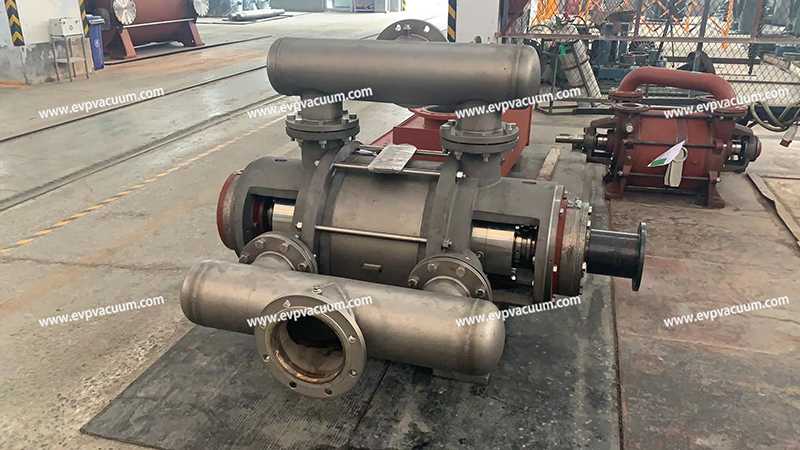
The liquid ring compressor stands as the ideal solution to these challenges. Its unique operating principle confers distinct advantages when handling media such as VCM:
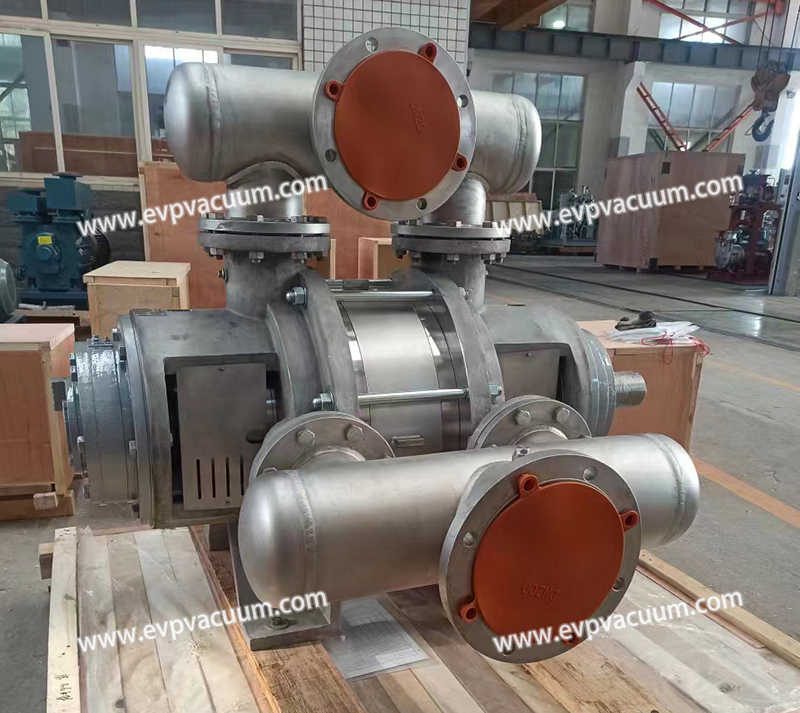
1)Intrinsically safe, suited to complex media: Employing liquid (typically water) as both sealing and working medium, the compressor forms a liquid ring during compression, enabling isothermal compression with minimal gas temperature rise. This characteristic significantly reduces thermodynamic risks when processing flammable and explosive gases. Furthermore, its simple internal mechanical structure, free from metal friction, minimises spark generation, ensuring high safety standards.
2)Proficient in handling moisture with integrated condensation: While compressing gas, the equipment effectively condenses any vapour present. This proves particularly advantageous in VCM recovery scenarios, enabling pre-condensation of partial gas volumes. This reduces gas mass, thereby enhancing the system’s actual pumping and processing capacity.
3)Flexibility for intermittent operations: As outlined in the patent, incorporating a recovery buffer tank and interlock control system upstream of the liquid ring compressoreffectively smooths gas flow fluctuations. Combined with the compressor’s inherent regulation capabilities, this provides a stable and reliable solution for intermittent venting from polymerisation reactors.
Technical Principle Overview: The core component of a liquid ring compressor is an impeller eccentrically mounted within the pump casing. During operation, a specified volume of liquid is introduced into the pump. The centrifugal force generated by the rotating impeller propels the liquid towards the casing wall, forming a liquid ring concentric with the pump casing. The periodic volume changes within the sealed chambers formed between the impeller blades and the liquid ring enable the intake, compression, and discharge of gas.
3. Innovative Approach: Beyond Individual Equipment, Towards Systemic Optimisation
The value of this patent lies not merely in the selection of a liquid ring compressor, but in establishing a highly efficient integrated recovery system. Its technical methodology clearly demonstrates how process optimisation resolves specific challenges:
1)System Process Optimisation
The apparatus forms a complete closed-loop circuit: ‘polymerisation reactor → receiving tank → monomer recovery buffer tank → liquid ring compressor → vapour-liquid separator → monomer recovery condenser → monomer liquid seal → monomer recovery tank’. The incorporation of buffer tanks and interlocking devices enables the system to automatically adapt to operational variations, minimising manual intervention and ensuring continuous, stable operation.
2)Energy-saving control strategy
The patent explicitly states that the optimised design addresses the issue of ‘elevated energy consumption due to continuous full-load operation of the liquid ring compressor’. This is typically achieved through integration with variable frequency drive (VFD) technology. Industry practice demonstrates that equipping liquid ring compressors with VFDs enables automatic motor speed adjustment based on actual gas load. This significantly reduces power consumption during non-peak periods, avoids operational shocks from frequent start-stops, and delivers substantial economic benefits.
4.Industry Outlook: Driving Green and Intelligent Upgrades
This liquid ring compressor technology aligns closely with the chemical industry’s broader trend towards greener and smarter operations. liquid ring compressor systems, with their zero oil contamination, low maintenance costs, and excellent compatibility with clean processes, are increasingly replacing traditional oil-lubricated vacuum equipment across multiple sectors.
Future integration with more advanced system designs holds promise. For instance, hybrid vacuum units combining water ring pumps with Roots pumps can maintain high pumping speeds while elevating ultimate vacuum levels by several orders of magnitude, meeting increasingly stringent process requirements. Furthermore, integrating intelligent sensors and predictive maintenance algorithms for real-time monitoring and optimisation of energy consumption and safety conditions represents the next frontier in this technology’s development.
Conclusion
The deepening application of liquid ring compressors in VCM recovery signifies the evolution of chemical process equipment from singular ‘functional implementation’ towards ‘safe, efficient, and intelligent systematic solutions’. This technology not only delivers direct safety and economic benefits to PVC producers but also provides a reference model for handling similar high-risk media across the entire process industry.